
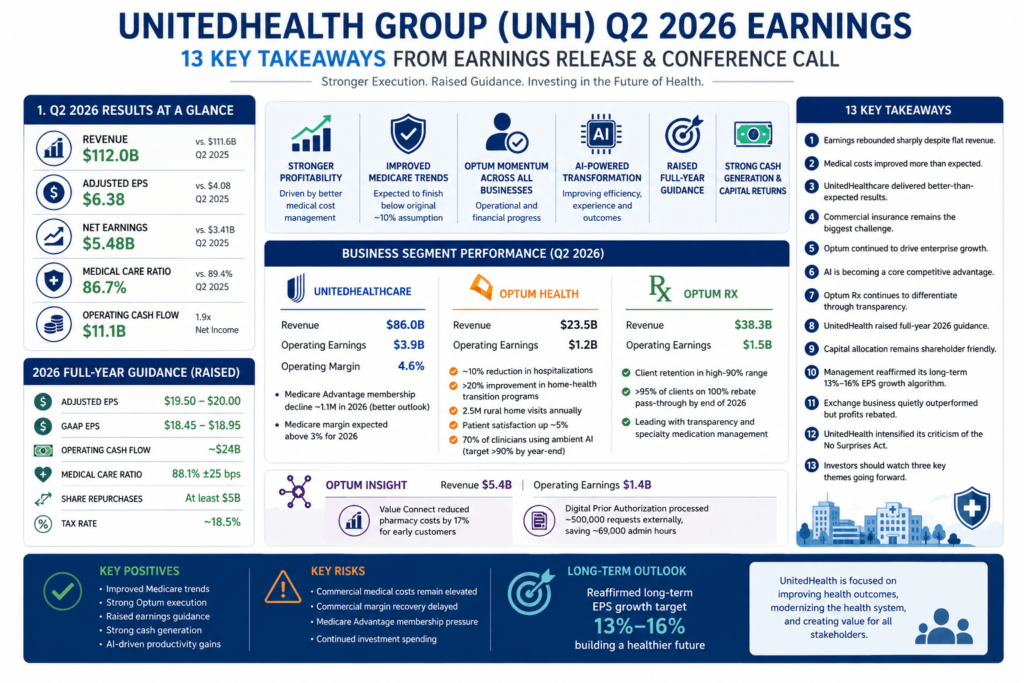
UnitedHealth Group delivered a stronger-than-expected second quarter, raising its full-year guidance while demonstrating meaningful operational improvement across UnitedHealthcare and Optum. Beyond the headline numbers, management also used the earnings call to provide valuable insights into commercial healthcare cost pressures, AI-driven transformation, and the company’s long-term growth strategy. Here are the 13 biggest takeaways.
Category Archives: Business
Business
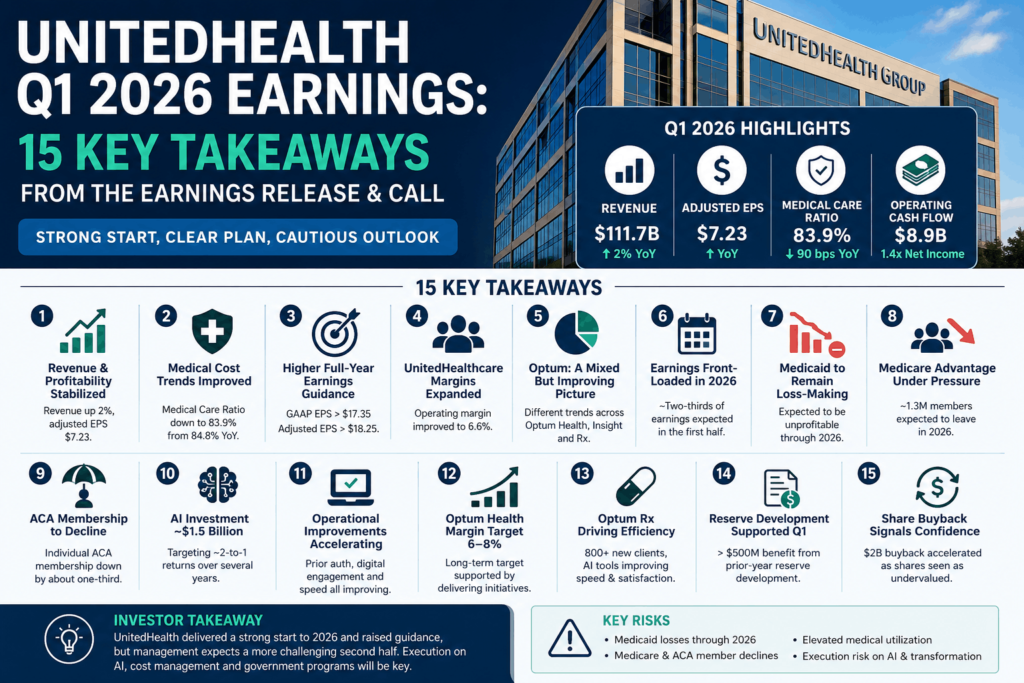
UnitedHealth Group Q1 2026: 15 Key Takeaways From Earnings and What Management Revealed on the Call
18
Jul
Jul
UnitedHealth Group (NYSE: UNH) entered 2026 under intense investor scrutiny after a challenging 2025 marked by elevated medical costs, Medicare Advantage pressure, and organisational restructuring. While the company’s first-quarter earnings showed improving operational performance, the accompanying earnings call painted a much more nuanced picture of the road ahead.
The earnings release highlighted stronger medical cost management, improved cash generation, and raised full-year guidance. However, management used the conference call to explain why investors should avoid extrapolating the strong first quarter, revealing several operational details and strategic initiatives that never appeared in the press release.
Here are the biggest takeaways from both the earnings release and the earnings call.
10
May
May
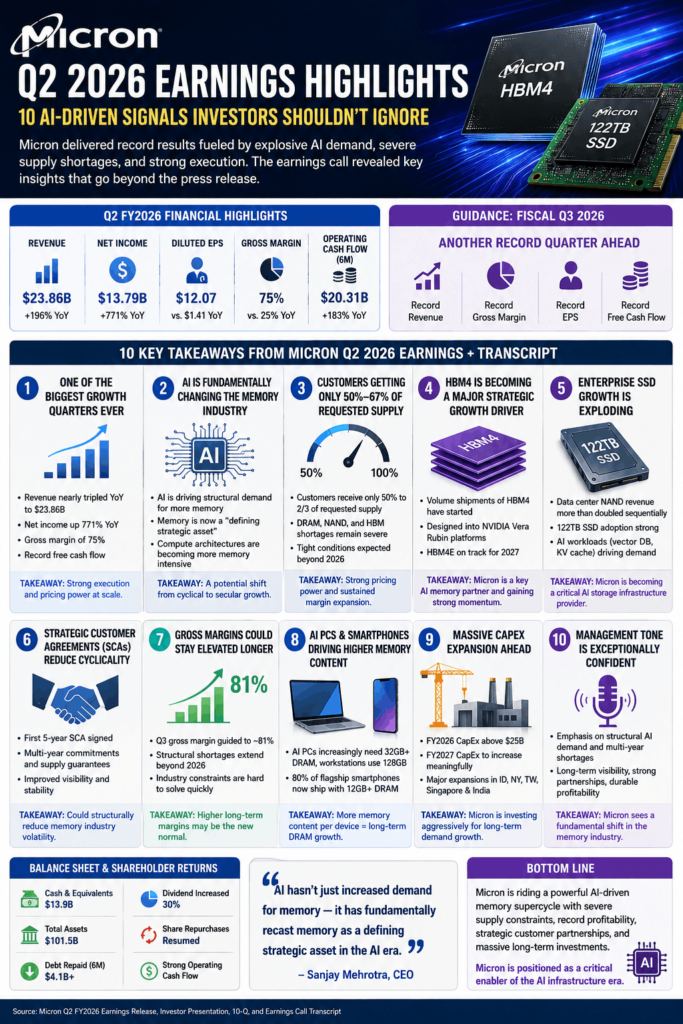
Micron Technology delivered one of the strongest earnings reports in semiconductor history during fiscal Q2 2026, powered by explosive AI demand, severe industry-wide memory shortages, and record profitability.
The company reported massive growth across DRAM, NAND, HBM, enterprise SSDs, and data center products while management repeatedly emphasized that AI is fundamentally reshaping the memory industry.
More importantly, Micron’s earnings transcript revealed several strategic insights that were barely mentioned in the official press release — including extreme supply shortages, structural industry changes, multi-year customer agreements, and expectations for elevated margins beyond 2026.
In this Micron earnings analysis, we break down the most important earnings highlights, guidance, and transcript insights investors should know.
10
May
May
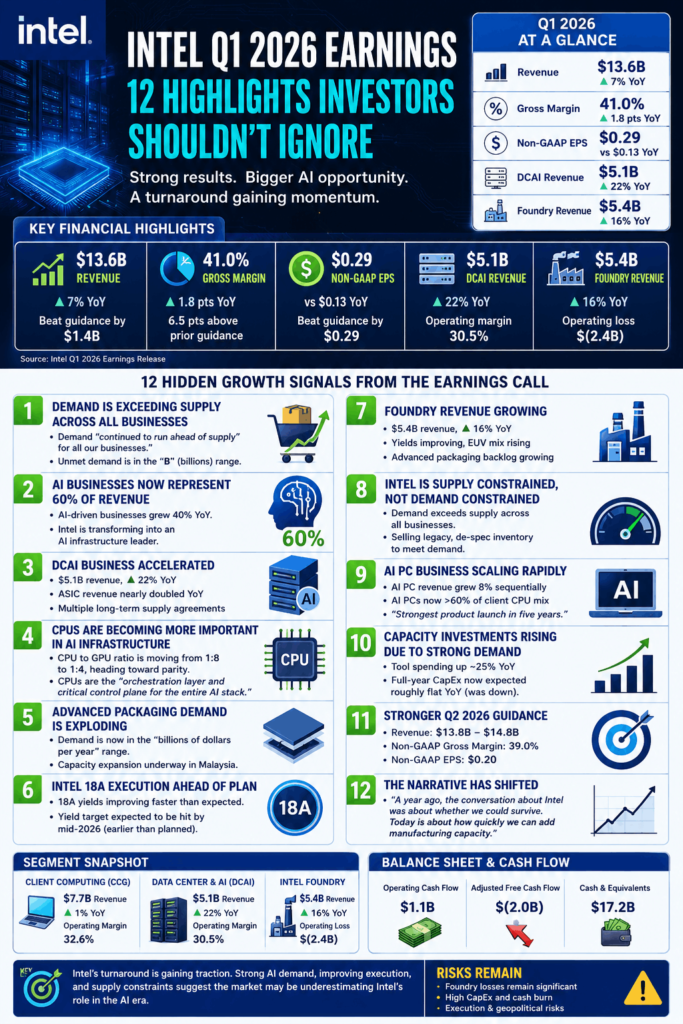
Intel delivered one of its strongest earnings reports in years, signaling that the company’s turnaround strategy may finally be gaining traction. While Intel’s Q1 2026 earnings release showed solid revenue growth, improving margins, and stronger guidance, the earnings transcript revealed much deeper insights about AI infrastructure demand, CPU market dynamics, advanced packaging growth, and foundry momentum.
The combination of accelerating AI workloads, improving Intel 18A execution, and stronger-than-expected demand paints a very different picture of Intel than investors saw just a year ago.
In this Intel earnings analysis, we break down the most important earnings highlights, transcript insights, and growth signals that investors may be underestimating.
10
May
May
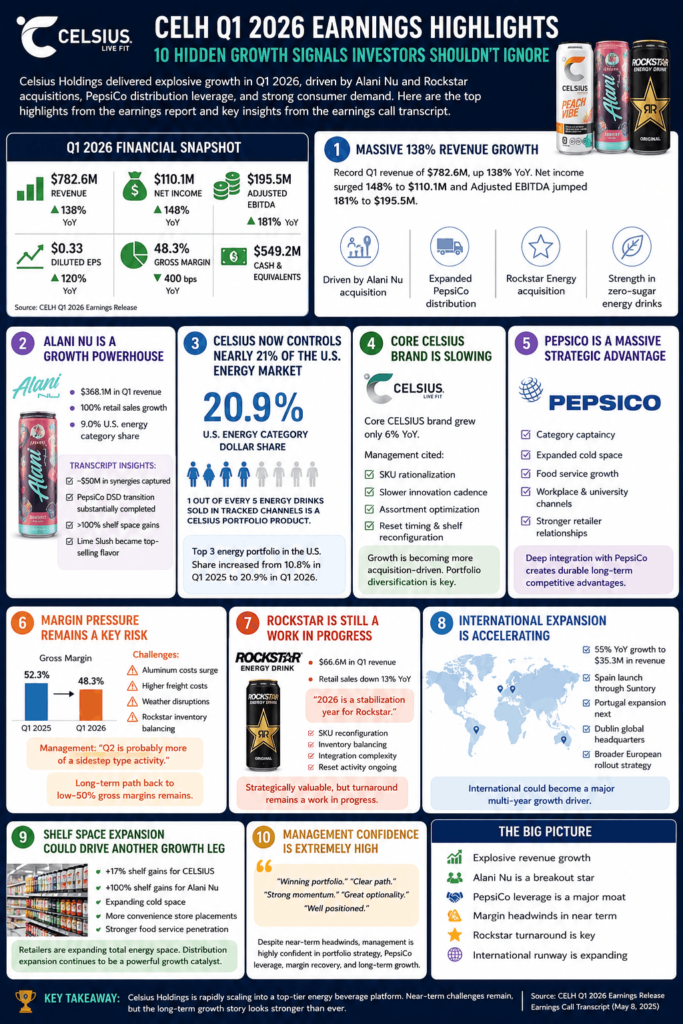
Celsius Holdings delivered one of the most closely watched earnings reports in the beverage sector this quarter, posting explosive revenue growth driven by the successful integration of Alani Nu and Rockstar Energy into the PepsiCo distribution ecosystem. While the headline numbers were impressive, the real story emerged during the earnings call, where management revealed several important operational insights, margin trends, and strategic developments that were not fully emphasized in the official press release.
In this CELH earnings analysis, we break down the biggest Q1 2026 earnings highlights, transcript-only insights, guidance commentary, and hidden growth signals investors should watch closely.
10
May
May
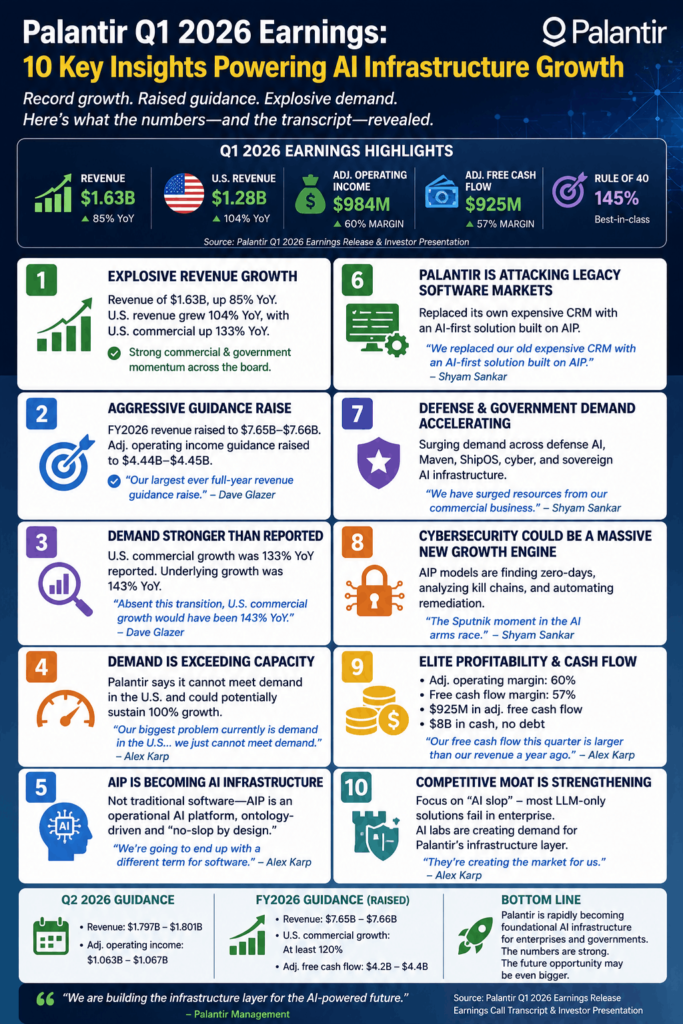
Palantir Technologies delivered one of the most remarkable earnings quarters in the AI software industry, reporting 85% revenue growth, triple-digit U.S. expansion, and sharply raised full-year guidance. But beyond the headline numbers, Palantir’s Q1 2026 earnings transcript revealed several deeper strategic insights that could matter even more for long-term investors.
The company is rapidly evolving from a government analytics vendor into what management repeatedly called “AI infrastructure” and an “AI operating system” for enterprises and governments. Between explosive commercial demand, accelerating defense adoption, and the rise of operational AI, Palantir’s latest earnings may mark a turning point in enterprise AI adoption.
This Palantir earnings analysis breaks down the most important earnings highlights, guidance updates, and transcript-only insights investors need to know.
Business
Public Bank FY2025 Earnings Highlights: 10 Key Growth Drivers and Guidance Investors Should Know
10
May
May
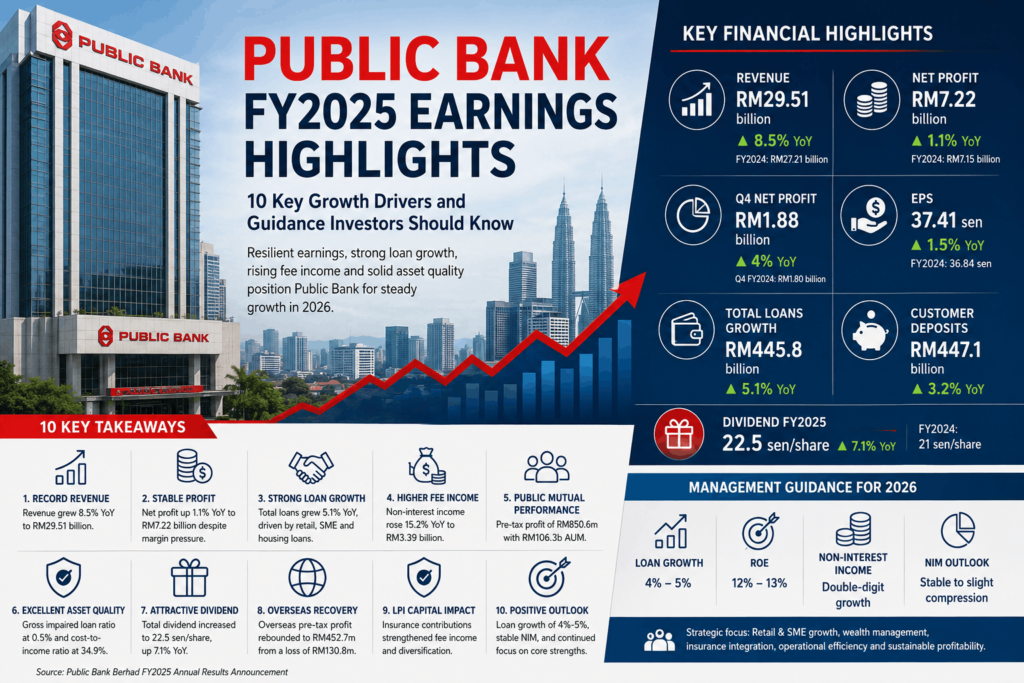
Public Bank Berhad delivered resilient FY2025 earnings despite ongoing net interest margin pressure and a mixed economic environment. The Malaysian banking giant reported record revenue, stable profit growth, improving overseas operations, and strong fee-based income contributions.
For investors looking for Public Bank earnings highlights, earnings analysis, and management guidance, the latest results reveal several important trends that could shape the bank’s growth outlook in 2026.
This earnings analysis explores the 10 biggest takeaways from Public Bank’s latest earnings results, including loan growth, dividend outlook, asset quality, and strategic expansion initiatives.
Business
Maybank FY2025 Earnings Highlights: 10 Key Growth Drivers and Guidance Investors Should Watch
10
May
May
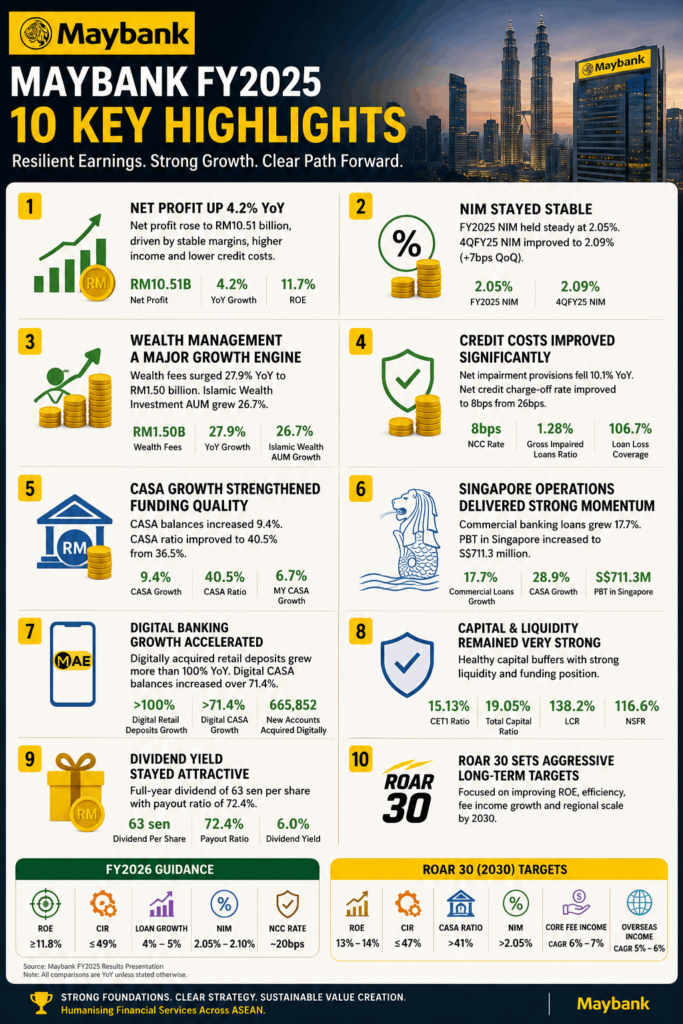
Malayan Banking Berhad delivered resilient FY2025 earnings results despite a challenging regional banking environment marked by lower interest rates, global uncertainty, and slower loan growth across ASEAN. The bank reported stronger profitability, improving asset quality, robust fee income growth, and stable margins while also launching its new long-term strategic roadmap, ROAR 30.
For investors seeking insights into Maybank earnings highlights, earnings analysis, growth outlook, and management guidance, the latest FY2025 results reveal a bank focused on disciplined execution, digital expansion, wealth management growth, and regional scaling opportunities.
Below are the 10 most important takeaways from Maybank’s latest earnings report and investor presentation.
Business
10 Key Takeaways From TNB FY2025 Earnings: Data Centre Growth, Higher Dividends and Massive RP4 CAPEX Expansion
10
May
May
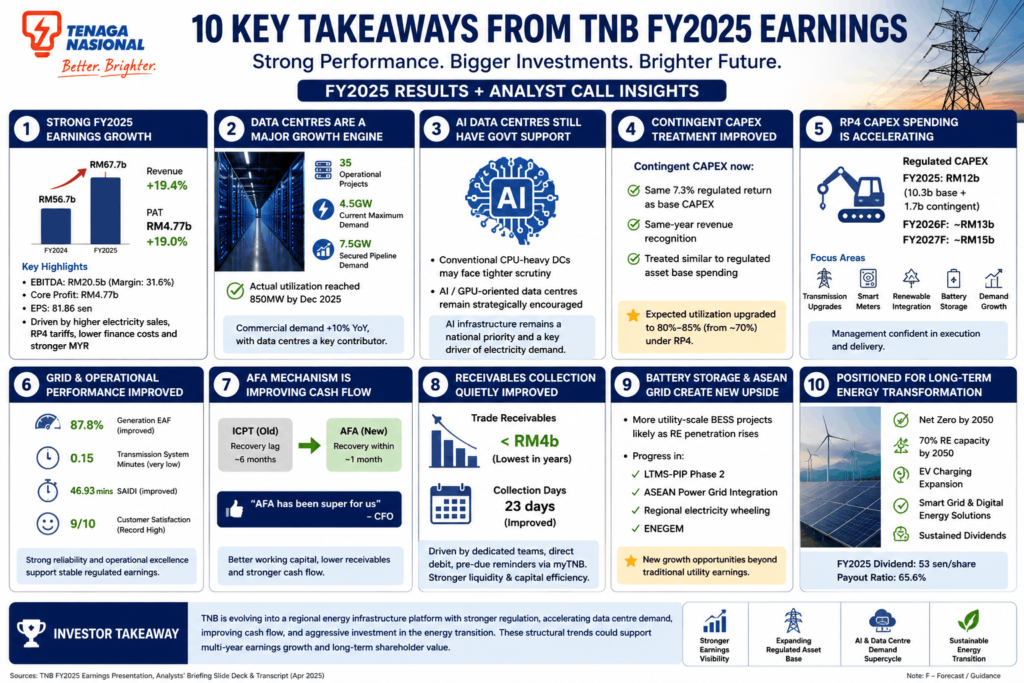
Tenaga Nasional Berhad (TNB) delivered a strong FY2025 earnings result, driven by accelerating electricity demand, higher regulated returns under RP4, and rising data centre investments in Malaysia. While the official earnings release highlighted revenue growth and stronger profitability, the analyst call revealed several deeper insights that could materially shape TNB’s long-term earnings outlook.
From contingent CAPEX recognition improvements to AI-driven data centre demand and ASEAN power grid opportunities, TNB appears to be transitioning from a traditional utility into a regional energy infrastructure platform.
Here are the 10 most important takeaways from TNB’s FY2025 earnings results and analyst transcript.
02
May
May
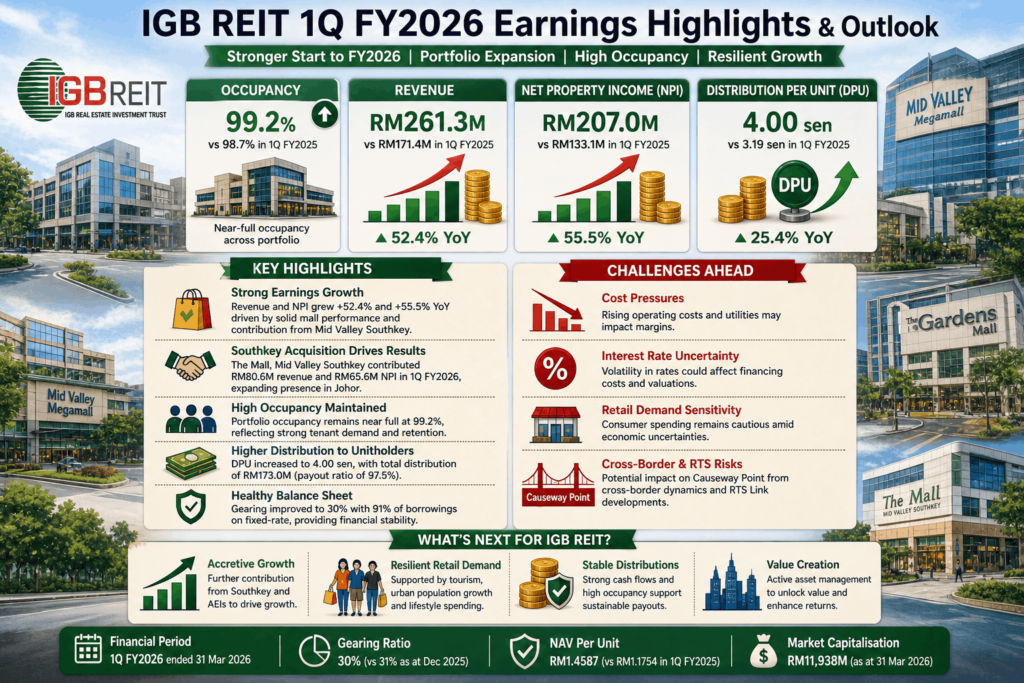
IGB REIT delivered a very strong start to FY2026, with earnings boosted by its latest acquisition and resilient mall performance. Let’s break down the key highlights and what investors should watch next.