-
- [adsw_currency_switcher]
- Home
- About Us
- Catalog
- Track Your Order
- Contact Us
- Shipping & Delivery

Every week brings another headline declaring that AI will obliterate the software industry. Valuations are debated, portfolio managers grow nervous, and retail investors wonder whether their technology ETFs are quietly becoming obsolete.
Most of these conversations, however, stop at vague generalisations. “AI will disrupt SaaS” is easy to say. What is harder — and far more useful — is asking the precise question: which companies, exactly, are at risk, and through which specific mechanism?
We decided to find out.
We pulled every equity holding from a major software-focused ETF — 107 companies representing over $7.6 billion in assets under management — and ran each one through five distinct AI disruption vectors. The results were simultaneously reassuring and alarming, and they carry lessons that matter well beyond this single fund.
Table of Contents
Before sharing the findings, it is worth explaining our framework. Not all AI disruption is the same. A company threatened by generative AI faces a completely different challenge than one threatened by robotic automation. We evaluated each holding against these five categories:
Generative AI refers to systems that create content, code, images, and documents that previously required human creative effort or specialist software. Think of tools that generate marketing copy, design assets, or financial summaries on demand.
Agentic AI describes autonomous AI systems that plan, act, and complete multi-step tasks without human intervention. These are not chatbots answering questions — they are systems that log into software, make decisions, and execute workflows end to end.
Physical AI covers robotics, autonomous vehicles, and AI embedded in the physical world. It threatens companies whose value depends on humans physically operating machines, managing fleets, or staffing warehouses.
Automation encompasses both rule-based and AI-driven workflow automation that eliminates repetitive business processes — invoice approvals, data reconciliation, compliance reporting, and so on.
Vibe Coding is the newest and perhaps most underappreciated vector. It refers to building software by describing what you want in plain language, rather than writing code. As tools like this mature, they directly threaten any company whose product helps non-engineers build or manage applications.
Out of 107 holdings analysed, our verdicts broke down as follows:
The most important finding is what this tells us about the fund’s construction. The top ten holdings — Microsoft, Palantir, Oracle, Salesforce, Palo Alto Networks, AppLovin, Intuit, CrowdStrike, ServiceNow, and Synopsys — together represent over 65% of total assets under management, and every single one of them scores NO. These are either AI infrastructure companies, AI platforms themselves, or deeply embedded enterprise systems that AI runs on top of rather than replaces.
In other words, the fund’s largest positions are structurally positioned as beneficiaries of AI, not casualties of it.
These are the companies we consider to face genuine existential disruption risk. Taken together, they represent approximately $421 million in fund exposure — roughly 5.5% of total assets. That is a manageable number, but not one to ignore.
Adobe (ADBE) — $351.6M, 4.60% of fund By far the largest “YES” position and the only one that matters at scale. Adobe’s entire creative suite — Photoshop, Illustrator, Premiere, After Effects — exists to help people produce images, video, and design assets. Generative AI now does this in seconds, for free or near-free. Adobe has responded aggressively with Firefly and AI integrations, but the underlying threat is structural: the barrier to creating professional-quality visual content has essentially collapsed. The question is whether Adobe can reinvent itself as an AI platform rather than a tool suite fast enough to justify its valuation.
DocuSign (DOCU) — $28.6M, 0.37% of fund DocuSign’s core product is e-signature. Agentic AI systems can now draft contracts, negotiate terms, flag anomalies, route documents for approval, and execute signatures — all without a human opening a browser. The entire contract lifecycle that DocuSign once facilitated is becoming an automated workflow. DocuSign has pivoted toward broader contract intelligence, but the original moat is eroding quickly.
UiPath (PATH) — $14.6M, 0.19% of fund UiPath built a multibillion-dollar business by teaching software robots to replicate human actions inside other software — clicking buttons, copying data, filling forms. This is called Robotic Process Automation, or RPA. The problem is that agentic AI does everything RPA does, but smarter, with less setup, and without needing to be reprogrammed when the underlying software changes. Vibe coding further threatens UiPath’s low-code workflow builder. The company is adapting, but it is running toward a category that is collapsing beneath it.
Pegasystems (PEGA) — $13.1M, 0.17% of fund Pegasystems sells Business Process Management software and a low-code platform that lets enterprises build custom applications without extensive engineering. Both products are in the crosshairs of agentic AI and vibe coding simultaneously. When an enterprise can describe a business process to an AI agent and have it execute autonomously — or describe an application in plain English and have it built in hours — the value proposition of a low-code BPM platform diminishes substantially.
BlackLine (BL) — $5.5M, 0.07% of fund BlackLine automates the financial close process — reconciliations, journal entries, intercompany transactions. This sounds niche, but it represents a genuine disruption case study. The entire financial close workflow is, at its core, structured data matching and rule application. Agentic AI and automation are already beginning to handle these tasks end to end. BlackLine’s customers are increasingly asking whether they need dedicated software or whether their existing AI infrastructure can handle it.
Five9 (FIVN) — $4.8M, 0.06% of fund Five9 provides cloud-based contact centre software — the infrastructure that powers customer service phone lines. This is perhaps the clearest disruption story of any company in this fund. Agentic AI voice agents are not a future threat; they are already deployed at scale, handling complex customer queries, processing returns, booking appointments, and escalating appropriately. The human-staffed contact centre is being replaced in real time, and the software that managed those humans faces the same fate.
Appian (APPN) — $3.3M, 0.04% of fund Like Pegasystems, Appian sells low-code workflow automation software to enterprises. The thesis for disruption is identical: when vibe coding lets a business analyst build a workflow application by typing a description, and when agentic AI can execute that workflow autonomously, the low-code platform layer becomes redundant. Appian is the most exposed of any company in this fund relative to the confluence of disruption vectors aligned against it.
The largest category — nearly half the fund — sits in a zone of meaningful but not existential disruption. These companies are not being replaced; they are being reshaped. The degree of risk varies significantly within this group.
Higher-risk partial positions worth monitoring:
Salesforce (CRM) is building its own agentic AI layer called Agentforce, which is simultaneously its greatest opportunity and its most direct threat. If Agentforce succeeds, customers may need fewer Salesforce licences, not more. Workday (WDAY) faces similar dynamics in HR automation. ServiceNow (NOW) is a workflow automation company being threatened by more capable workflow automation technology. HubSpot (HUBS) and Freshworks (FRSH) serve smaller businesses with lighter enterprise lock-in, making them more vulnerable to AI-native alternatives.
More defensible partial positions:
Autodesk (ADSK) is deeply embedded in construction and manufacturing workflows, and while generative AI will change how engineers design, the underlying simulation and compliance infrastructure is not going away. Trimble (TRMB) provides GPS and positioning technology that physical AI systems actually depend on. Manhattan Associates (MANH) manages supply chain complexity that is increasing, not decreasing, as automation spreads.
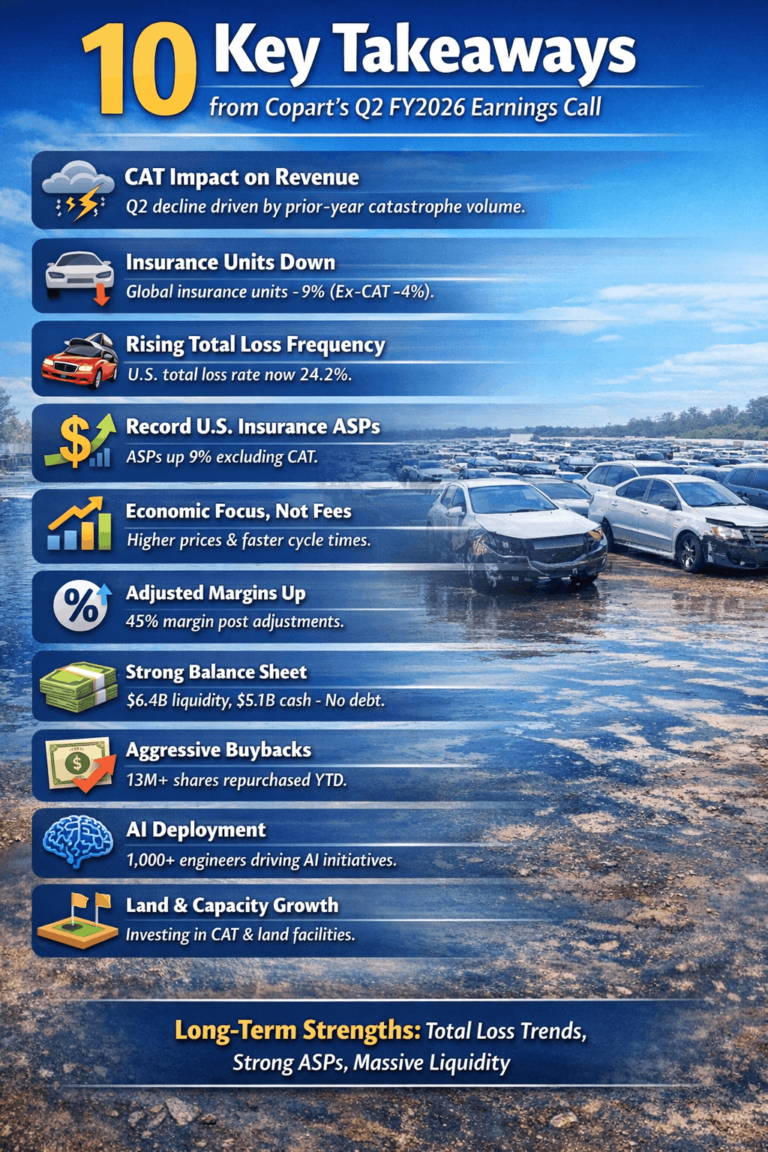
On the call, management stressed that fee pricing is not the main battleground.
The real differentiator is delivered economic outcome:
Higher selling prices
Faster cycle times
Reduced storage costs
Improved policyholder satisfaction
They argue these factors dwarf small fee differences between competitors.
The 49 holdings rated as low disruption risk share a crucial characteristic: they are either infrastructure that AI runs on, or they are AI themselves.
Cybersecurity companies — CrowdStrike (CRWD), Palo Alto Networks (PANW), Zscaler (ZS), SentinelOne (S), Fortinet (FTNT) — are not threatened by AI; they are powered by it. More AI means more attack surface, more threat vectors, and more need for security infrastructure. These companies are net beneficiaries.
Data and cloud infrastructure — Oracle (ORCL), Datadog (DDOG), Elastic (ESTC), Confluent (CFLT), Nutanix (NTNX) — are the plumbing that AI systems require. You cannot run a large language model without databases, observability, and data streaming infrastructure.
Chip design EDA tools — Synopsys (SNPS) and Cadence (CDNS) — are perhaps the most protected of all. Designing the chips that power AI requires extraordinarily specialised software with decades of embedded knowledge and regulatory certification. Generative AI cannot replace them; it relies on them.
AI-native companies — Palantir (PLTR), C3.ai (AI), SoundHound (SOUN), Zeta Global (ZETA), CCC Intelligent Solutions (CCC), Aurora Innovation (AUR) — are the AI. The question of whether AI will disrupt them is somewhat circular. The real question for investors is whether they will win in their respective AI markets, which is a different analysis entirely.
Deeply regulated vertical software — Tyler Technologies (TYL) serves government agencies, Guidewire (GWRE) serves insurance carriers, nCino (NCNO) serves banks, and Blackbaud (BLKB) serves nonprofits. These companies have compliance moats, integration depth, and switching costs that make disruption a decade-long process at minimum.
Looking across the entire fund, here is where each disruption vector does its most concentrated damage:
Generative AI hits creative and content software hardest. Adobe is the obvious casualty, but Electronic Arts (EA) and Take-Two Interactive (TTWO) also face meaningful pressure as AI generates game assets, dialogue, and even entire game worlds. Snap (SNAP) is threatened as AI-generated content reduces the premium on human-created content.
Agentic AI is the broadest and most powerful vector. It threatens DocuSign, UiPath, Pegasystems, Five9, and Appian at the existential level, and exerts meaningful pressure on Salesforce, Workday, ServiceNow, HubSpot, Freshworks, and virtually every company that automates a human workflow on behalf of a business.
Physical AI — robotics and autonomous systems — threatens fleet management software (Samsara), supply chain software (Manhattan Associates), point-of-sale systems (NCR Voyix, Lightspeed), and smart home platforms (Alarm.com) as the physical world becomes increasingly autonomous.
Automation is the most mature vector and its damage is already reflected in valuations. The clearest targets are accounts payable and financial workflow companies like Bill Holdings (BILL), BlackLine (BL), Vertex Inc (VERX), and OneStream (OS).
Vibe coding is the most underappreciated long-term threat. When software can be built through conversation, the entire market for low-code platforms, no-code tools, and developer workflow software shrinks. The most exposed companies are UiPath, Pegasystems, Appian, and GitLab — though even Atlassian (TEAM) and ServiceNow face pressure as the volume of software tickets and workflow configurations required to build applications drops.
| Ticker | Company | Core Product | Gen AI | Agentic AI | Physical AI | Automation | Vibe Coding | OVERALL |
|---|---|---|---|---|---|---|---|---|
| MSFT | Microsoft | OS, Cloud, Office, AI | NO | NO | NO | NO | NO | NO |
| PLTR | Palantir | AI analytics platform | NO | NO | NO | NO | NO | NO |
| ORCL | Oracle | Database, ERP, Cloud | NO | NO | NO | NO | NO | NO |
| CRM | Salesforce | CRM platform | NO | PARTIAL | NO | PARTIAL | NO | PARTIAL |
| PANW | Palo Alto | Cybersecurity platform | NO | NO | NO | NO | NO | NO |
| ADBE | Adobe | Creative & marketing tools | YES | NO | NO | NO | NO | YES |
| APP | AppLovin | Mobile ad optimization | NO | NO | NO | NO | NO | NO |
| INTU | Intuit | Tax & accounting | PARTIAL | PARTIAL | NO | PARTIAL | NO | PARTIAL |
| CRWD | CrowdStrike | Endpoint security | NO | NO | NO | NO | NO | NO |
| NOW | ServiceNow | IT workflow automation | NO | PARTIAL | NO | PARTIAL | PARTIAL | PARTIAL |
| SNPS | Synopsys | EDA chip design | NO | NO | NO | NO | NO | NO |
| CDNS | Cadence | EDA chip design | NO | NO | NO | NO | NO | NO |
| FTNT | Fortinet | Network security hardware | NO | NO | NO | NO | NO | NO |
| ADSK | Autodesk | CAD/engineering design | PARTIAL | NO | PARTIAL | NO | NO | PARTIAL |
| EA | Electronic Arts | Video games | PARTIAL | NO | NO | NO | PARTIAL | PARTIAL |
| ROP | Roper Technologies | Niche vertical software | NO | NO | NO | NO | NO | NO |
| TTWO | Take-Two Interactive | Video games | PARTIAL | NO | NO | NO | PARTIAL | PARTIAL |
| DDOG | Datadog | Cloud observability | NO | NO | NO | NO | NO | NO |
| MSTR | Strategy Inc | Bitcoin treasury | NO | NO | NO | NO | NO | NO |
| FICO | Fair Isaac | Credit scoring models | PARTIAL | NO | NO | NO | NO | PARTIAL |
| WDAY | Workday | HR & finance software | NO | PARTIAL | NO | PARTIAL | PARTIAL | PARTIAL |
| ZM | Zoom | Video communications | PARTIAL | PARTIAL | NO | NO | NO | PARTIAL |
| PTC | PTC Inc | IoT & industrial software | NO | NO | PARTIAL | NO | NO | PARTIAL |
| TRMB | Trimble | GPS & construction tech | NO | NO | NO | NO | NO | NO |
| ZS | Zscaler | Cloud security (zero trust) | NO | NO | NO | NO | NO | NO |
| TYL | Tyler Technologies | Government software | NO | NO | NO | NO | NO | NO |
| GEN | Gen Digital | Consumer antivirus | NO | NO | NO | NO | NO | PARTIAL |
| TEAM | Atlassian | Jira, Confluence | NO | PARTIAL | NO | NO | PARTIAL | PARTIAL |
| HUBS | HubSpot | Marketing & CRM | PARTIAL | PARTIAL | NO | PARTIAL | NO | PARTIAL |
| GWRE | Guidewire | Insurance software | NO | NO | NO | NO | NO | NO |
| DT | Dynatrace | AI observability platform | NO | NO | NO | NO | NO | NO |
| NTNX | Nutanix | Hybrid cloud infra | NO | NO | NO | NO | NO | NO |
| CFLT | Confluent | Data streaming (Kafka) | NO | NO | NO | NO | NO | NO |
| IDCC | InterDigital | Wireless tech patents | NO | NO | NO | NO | NO | NO |
| IOT | Samsara | Fleet & operations IoT | NO | NO | PARTIAL | PARTIAL | NO | PARTIAL |
| DOCU | DocuSign | E-signature & contracts | PARTIAL | YES | NO | YES | NO | YES |
| MANH | Manhattan Associates | Supply chain software | NO | PARTIAL | PARTIAL | PARTIAL | NO | PARTIAL |
| RBRK | Rubrik | Data security & backup | NO | NO | NO | NO | NO | NO |
| CWAN | Clearwater Analytics | Investment analytics | PARTIAL | PARTIAL | NO | PARTIAL | NO | PARTIAL |
| QBTS | D-Wave Quantum | Quantum computing | NO | NO | NO | NO | NO | NO |
| OTEX | Open Text | Content management (ECM) | PARTIAL | PARTIAL | NO | PARTIAL | NO | PARTIAL |
| U | Unity Software | Game & simulation engine | NO | NO | NO | NO | NO | NO |
| PCOR | Procore | Construction management | NO | PARTIAL | PARTIAL | PARTIAL | PARTIAL | PARTIAL |
| AUR | Aurora Innovation | Autonomous trucking | NO | NO | NO | NO | NO | NO |
| SNAP | Snap | Social media / AR camera | PARTIAL | NO | NO | NO | NO | PARTIAL |
| BMNR | BitMine Immersion | Bitcoin mining hardware | NO | NO | NO | NO | NO | NO |
| DSGX | Descartes Systems | Logistics & routing software | NO | PARTIAL | NO | PARTIAL | NO | PARTIAL |
| CORZ | Core Scientific | Bitcoin mining & HPC | NO | NO | NO | NO | NO | NO |
| HUT | Hut Corp | Bitcoin mining | NO | NO | NO | NO | NO | NO |
| WULF | TeraWulf | Bitcoin mining | NO | NO | NO | NO | NO | NO |
| RIOT | Riot Platforms | Bitcoin mining | NO | NO | NO | NO | NO | NO |
| ESTC | Elastic NV | Search & data analytics | NO | NO | NO | NO | NO | NO |
| BSY | Bentley Systems | Infrastructure engineering | PARTIAL | NO | PARTIAL | NO | PARTIAL | PARTIAL |
| CIFR | Cipher Mining | Bitcoin mining | NO | NO | NO | NO | NO | NO |
| PATH | UiPath | RPA automation | NO | YES | NO | YES | YES | YES |
| DBX | Dropbox | Cloud file storage | PARTIAL | NO | NO | NO | PARTIAL | PARTIAL |
| S | SentinelOne | AI endpoint security | NO | NO | NO | NO | NO | NO |
| ACIW | ACI Worldwide | Payment processing | NO | NO | NO | NO | NO | NO |
| DLB | Dolby | Audio/visual tech & IP | NO | NO | NO | NO | NO | NO |
| PEGA | Pegasystems | BPM & low-code platform | NO | YES | NO | YES | YES | YES |
| APPF | AppFolio | Property management | PARTIAL | PARTIAL | NO | PARTIAL | PARTIAL | PARTIAL |
| CVLT | Commvault | Data backup & recovery | NO | NO | NO | NO | NO | NO |
| BILL | Bill Holdings | SMB payments & AP/AR | NO | PARTIAL | NO | PARTIAL | NO | PARTIAL |
| LIF | Life360 | Family safety & location | NO | NO | NO | NO | NO | NO |
| TTAN | ServiceTitan | Field service management | NO | PARTIAL | PARTIAL | PARTIAL | NO | PARTIAL |
| GTLB | GitLab | DevOps platform | NO | PARTIAL | NO | NO | YES | PARTIAL |
| CRCL | Circle Internet | USDC stablecoin & payments | NO | NO | NO | NO | NO | NO |
| BOX | Box Inc | Cloud content management | PARTIAL | NO | NO | NO | PARTIAL | PARTIAL |
| QLYS | Qualys | Cloud security & compliance | NO | NO | NO | NO | NO | NO |
| SOUN | SoundHound AI | Voice AI platform | NO | NO | NO | NO | NO | NO |
| WK | Workiva | Financial reporting platform | PARTIAL | PARTIAL | NO | PARTIAL | NO | PARTIAL |
| MARA | MARA Holdings | Bitcoin mining | NO | NO | NO | NO | NO | NO |
| QTWO | Q2 Holdings | Digital banking software | NO | NO | NO | NO | NO | NO |
| ZETA | Zeta Global | AI marketing platform | NO | NO | NO | NO | NO | NO |
| YOU | Clear Secure | Biometric identity (TSA) | NO | NO | PARTIAL | NO | NO | PARTIAL |
| CCC | CCC Intelligent Solutions | Auto insurance AI | NO | NO | NO | NO | NO | NO |
| CLSK | CleanSpark | Bitcoin mining | NO | NO | NO | NO | NO | NO |
| RNG | RingCentral | Cloud communications | PARTIAL | PARTIAL | NO | NO | PARTIAL | PARTIAL |
| TDC | Teradata | Data warehouse & analytics | PARTIAL | NO | NO | NO | NO | PARTIAL |
| VRNS | Varonis | Data security & governance | NO | NO | NO | NO | NO | NO |
| ALRM | Alarm.com | Smart home security | NO | NO | PARTIAL | PARTIAL | NO | PARTIAL |
| KVYO | Klaviyo | Email & SMS marketing | PARTIAL | PARTIAL | NO | PARTIAL | NO | PARTIAL |
| TENB | Tenable | Vulnerability management | NO | NO | NO | NO | NO | NO |
| SPSC | SPS Commerce | EDI & supply chain | NO | PARTIAL | NO | PARTIAL | PARTIAL | PARTIAL |
| ADEA | Adeia | Media tech IP licensing | NO | NO | NO | NO | NO | NO |
| OS | OneStream | Corporate financial planning | NO | PARTIAL | NO | PARTIAL | NO | PARTIAL |
| AGYS | Agilysys | Hospitality mgmt software | NO | PARTIAL | PARTIAL | PARTIAL | NO | PARTIAL |
| BB | BlackBerry | IoT & embedded security | NO | NO | NO | NO | NO | NO |
| PRGS | Progress Software | App dev & data platform | NO | NO | NO | NO | PARTIAL | PARTIAL |
| BLKB | Blackbaud | Nonprofit sector software | NO | NO | NO | NO | NO | NO |
| BL | BlackLine | Accounting automation | NO | YES | NO | YES | NO | YES |
| RAMP | LiveRamp | Data connectivity & identity | NO | NO | NO | NO | NO | NO |
| NCNO | nCino | Banking cloud platform | NO | NO | NO | NO | NO | NO |
| NN | NextNav | 3D GPS & positioning | NO | NO | NO | NO | NO | NO |
| FRSH | Freshworks | CRM & helpdesk software | PARTIAL | PARTIAL | NO | PARTIAL | PARTIAL | PARTIAL |
| AVPT | AvePoint | Microsoft 365 data mgmt | NO | NO | NO | NO | PARTIAL | PARTIAL |
| FIVN | Five9 | Cloud contact center | NO | YES | NO | YES | NO | YES |
| BRZE | Braze | Customer engagement platform | PARTIAL | PARTIAL | NO | PARTIAL | NO | PARTIAL |
| ATEN | A10 Networks | App delivery networking | NO | NO | NO | NO | NO | NO |
| ALKT | Alkami | Digital banking platform | NO | NO | NO | NO | NO | NO |
| VYX | NCR Voyix | POS & retail tech | NO | NO | PARTIAL | PARTIAL | NO | PARTIAL |
| AI | C3.ai | Enterprise AI platform | NO | NO | NO | NO | NO | NO |
| LSPD | Lightspeed Commerce | Retail & restaurant POS | NO | NO | PARTIAL | PARTIAL | NO | PARTIAL |
| INTA | Intapp | Professional services software | PARTIAL | PARTIAL | NO | NO | PARTIAL | PARTIAL |
| APPN | Appian | Low-code BPM platform | NO | YES | NO | YES | YES | YES |
| VERX | Vertex Inc | Tax compliance software | NO | PARTIAL | NO | PARTIAL | NO | PARTIAL |
| PAR | PAR Technology | Restaurant tech platform | NO | PARTIAL | PARTIAL | PARTIAL | NO | PARTIAL |
| CXM | Sprinklr | Social media management | PARTIAL | PARTIAL | NO | PARTIAL | NO | PARTIAL |
| ASAN | Asana | Work management platform | NO | PARTIAL | NO | PARTIAL | PARTIAL | PARTIAL |
| PD | PagerDuty | IT incident management | NO | PARTIAL | NO | PARTIAL | NO | PARTIAL |
| SEMR | Semrush | SEO & digital marketing | PARTIAL | PARTIAL | NO | NO | NO | PARTIAL |
| RPD | Rapid7 | Cybersecurity analytics | NO | NO | NO | NO | NO | NO |
| NABL | N-able | Managed IT services | NO | NO | NO | NO | NO | NO |
| Verdict | Count | % of Software Holdings |
|---|---|---|
| YES — High replacement risk | 7 | ~7% |
| PARTIAL — Meaningful disruption risk | 51 | ~48% |
| NO — Safe / Complementary / Is AI | 49 | ~46% |
| Ticker | Company | Market Value | Weight | Primary Threat Vector |
|---|---|---|---|---|
| ADBE | Adobe | $351.6M | 4.60% | Generative AI — image, video, copy generation commoditizes creative tools |
| DOCU | DocuSign | $28.6M | 0.37% | Agentic AI + Automation — contracts drafted, negotiated & executed autonomously |
| PATH | UiPath | $14.6M | 0.19% | Agentic AI + Vibe Coding — RPA bots replaced by smarter AI agents |
| PEGA | Pegasystems | $13.1M | 0.17% | Agentic AI + Vibe Coding — BPM/low-code replaced by natural language |
| BL | BlackLine | $5.5M | 0.07% | Agentic AI + Automation — financial close fully automatable |
| FIVN | Five9 | $4.8M | 0.06% | Agentic AI — voice agents already replacing human call centers today |
| APPN | Appian | $3.3M | 0.04% | Agentic AI + Vibe Coding — low-code BPM made obsolete by AI coding |
Combined “YES” exposure = ~$421M or ~5.5% of total fund value — relatively contained given the fund is ~$7.6B total.
| Vector | Primary Targets in This Fund |
|---|---|
| Generative AI | ADBE (creative tools), EA/TTWO (game assets), SNAP (UGC platforms), TDC (legacy analytics) |
| Agentic AI | DOCU, PATH, PEGA, FIVN, APPN, BL, NOW, WDAY, FRSH, CRM |
| Physical AI | IOT/TRMB (fleet/positioning), MANH (warehousing), VYX/LSPD (cashierless retail), AUR (already IS physical AI) |
| Automation | BILL, VERX, SPSC, OS, BL, KVYO, PD |
| Vibe Coding | PATH, PEGA, APPN, GTLB, NOW, TEAM, PRGS |
The fund is relatively well-constructed against AI disruption — the top 10 holdings (65%+ of AUM) are all NO, meaning Microsoft, Palantir, Oracle, Salesforce, Palo Alto, AppLovin, Intuit, CrowdStrike, ServiceNow, and Synopsys are either AI infrastructure players, AI platforms themselves, or deeply embedded enterprise systems that AI runs on top of rather than replaces.
This fund is better constructed for an AI world than most ETF investors probably realise. The headline risk — that AI will destroy software companies — is substantially concentrated in a handful of positions that together represent less than 6% of total assets. The largest holdings are genuinely well-positioned.
That said, the 48% in the “partial disruption” category deserves active monitoring. The distinction between a partial-disruption company that successfully pivots and one that slowly loses relevance is not always visible in current financials — it shows up over three to five years in net revenue retention, pricing power, and customer expansion rates.
The most important mental model for evaluating this fund — or any software portfolio in the AI era — is not “will AI replace this software?” but rather “does this software need to exist for AI to work?” Companies that answer yes to the second question are among the most durable technology investments available. Companies that answer yes to the first face a different future entirely.
Compared to a decade ago, Copart is in a much stronger land ownership position.
They now operate dedicated catastrophic facilities and maintain hundreds of acres reserved for storm activity.
Management emphasized that land development has long lead times, so they continue disciplined investment to ensure capacity remains ahead of demand over a 10-year horizon.
While Q2 showed lower year-over-year revenue and earnings, the earnings call reinforced several structural strengths:
Rising total loss frequency
Strong pricing power
Durable competitive moats
Massive liquidity
Disciplined capital allocation
The quarter reflects insurance cycle headwinds more than business model deterioration. The long-term thesis remains centered on liquidity, scale, and structural total loss growth.
Thank you for reading this post. If you enjoy this post, please share it with your friends or family members. Let’s get life transformed together! Many thanks.
Trending Posts
Copart Q2 FY2026 Earnings: 10 Key Takeaways on Insurance Trends, ASP Growth and Buybacks Copy
Copart Q2 FY2026 Earnings: 10 Key Takeaways on Insurance Trends, ASP Growth and Buybacks
Alphabet GOOGL Q4 2025 Earnings: 10 Key Takeaways on AI, Cloud Growth and $400B Revenue Milestone
10 Key AMD Earnings Insights From Q4 2025 and FY 2025 Every Investor Should Know
Amazon Q4 2025 Earnings Deep Dive: 10 Hidden Insights from the Press Release and Transcript
Meta Earnings Q4 2025: 12 Things Investors Miss If They Only Read The Press Release
Trending Posts
Copart Q2 FY2026 Earnings: 10 Key Takeaways on Insurance Trends, ASP Growth and Buybacks Copy
Copart Q2 FY2026 Earnings: 10 Key Takeaways on Insurance Trends, ASP Growth and Buybacks
Alphabet GOOGL Q4 2025 Earnings: 10 Key Takeaways on AI, Cloud Growth and $400B Revenue Milestone
10 Key AMD Earnings Insights From Q4 2025 and FY 2025 Every Investor Should Know
Amazon Q4 2025 Earnings Deep Dive: 10 Hidden Insights from the Press Release and Transcript
Meta Earnings Q4 2025: 12 Things Investors Miss If They Only Read The Press Release
Apple Q1 2026 Earnings Breakdown: Hidden Call Insights Investors Missed

Visa Earnings Call vs Policy Risk Reality: 10 Hidden Signals From Management Commentary (Q1 FY2026)
Tesla Q4 FY2025 Earnings Highlights: AI, Robotaxi, Optimus and 2026 Growth Strategy
Copyright 2021 © MR Life Changer | Powered by www.mrlifechanger.com
For business collaboration/enquiries, please contact: mr.life.changer9@gmail.com